July 2026
Tackling the Next Emissions Frontier: Tyres, Brakes and the Road Surface

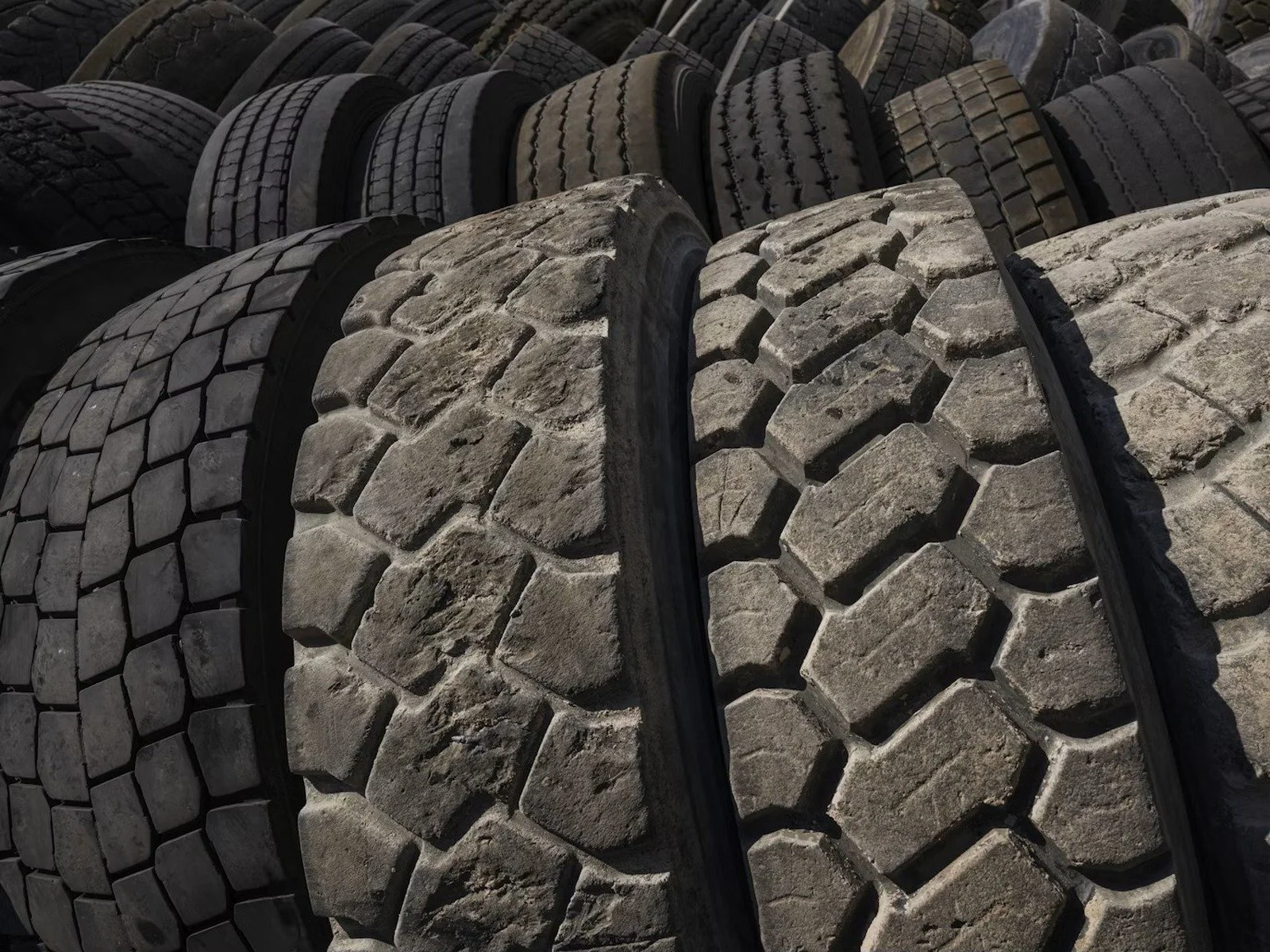
As electric vehicles take exhaust pipes out of the emissions conversation, a harder question moves to the front of the queue: what's coming off the tyres, the brakes, the road surface itself?
Non exhaust particulate emissions — the dust generated simply by driving, regardless of what's under the bonnet — are fast becoming one of the most important unresolved problems in transport and environmental research. Studies across several major European cities have found that non exhaust sources already account for the majority of traffic related particulate pollution, contributing an estimated 68–88% of PM10 and up to 78% of PM2.5 from road transport. The regulatory response is already taking shape: Euro 7 introduces the first EU-wide brake particulate limits from November 2026, with tyre abrasion limits for new tyre types following from 2028. Yet unlike exhaust emissions, non exhaust particulates are notoriously difficult to generate, capture and measure with any consistency.
Electrification complicates the picture rather than resolving it. Regenerative braking in EVs cuts brake wear emissions substantially, but the added weight of battery packs — EVs typically run around 20% heavier than equivalent combustion vehicles — pushes tyre wear in the opposite direction. The net effect on overall particulate output depends heavily on vehicle design, driving conditions and road surface, which is precisely why controlled, repeatable testing matters.
Over the past several months, our team has been quietly researching that problem, working through the approaches needed to generate and characterise particulate matter reliably under controlled laboratory conditions. We've been investigating portable, enclosed test architectures capable of replicating real operating conditions: realistic loading, transient events, representative surface interactions. Alongside that, we've looked at how high performance drive and control systems could reproduce genuine torque, speed and thermal behaviour, rather than rough approximations of it.
We've also explored adaptable, reconfigurable control setups paired with data acquisition frameworks designed to support repeatable, high quality datasets — plus sealed particulate environments suited to atmospheric and health impact studies.
The result is a body of research pointing toward a lab scale capability for generating and characterising particulate matter under controlled conditions — shaped around the questions this next phase of the sector is going to keep asking, against a regulatory timeline that is now fixed rather than hypothetical.
If your research or industrial programme touches particulate generation, emissions testing, or controlled environmental studies, we'd welcome the conversation.
Sources:
InterRegs, EU Euro 7 Emissions Regulation Published — interregs.com
Air Quality News, Brake wear particles the greatest health threat from road transport emissions — airqualitynews.com
June 2026
Motrac Shares Engineering Expertise at Sci‑Tech Daresbury’s BBN Pitch Event
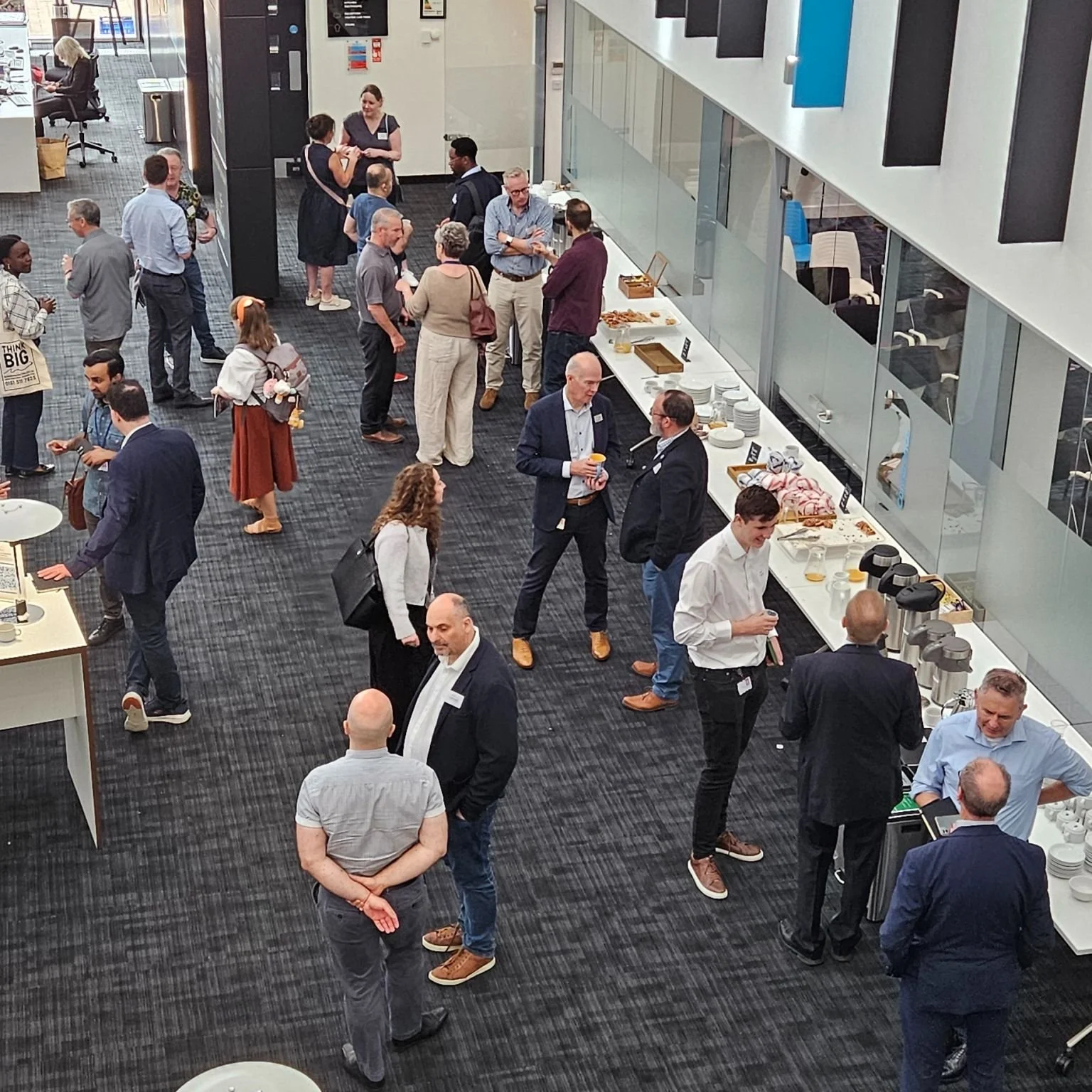
Motrac Research Engineering Ltd took part in the BBN 45‑second pitch session at Sci‑Tech Daresbury on 19th June 2026, joining a room of innovative organisations from across the campus. The event brought together businesses at different stages of their journey, each with the opportunity to introduce their work, spark conversations and build new connections.
During our pitch, Director Steve Hammond highlighted Motrac’s collaborative work with universities and technology companies across the UK. Our multidisciplinary team — spanning chemical, mechanical, electrical, electronic and mechatronic engineering — works closely with partners to design, build and deliver pilot scale systems and advanced test beds. These systems play a vital role in enabling research, accelerating innovation and supporting organisations as they move from early‑stage concepts to validated, scalable solutions.
Networking events like BBN are a core strength of the Sci‑Tech Daresbury community. The campus brings together researchers, engineers, entrepreneurs and industry specialists, creating an environment where collaboration happens naturally and ideas progress quickly. For Motrac, the session provided the opportunity to meet new contacts, explore emerging partnerships and identify organisations facing challenges we can help solve.
“Since joining the Sci‑Tech Daresbury community, we’ve benefited from a strong culture of support — from introductions that have led to meaningful collaborations, to regular events that help us stay connected with the wider innovation ecosystem. These interactions continue to strengthen our network and open new opportunities for joint research, technology development and knowledge exchange.” - Steve Hammond, Director

We extend our thanks to Paul Treloar, John Leake and Stephen Slater for hosting another excellent event and for their ongoing work in fostering a thriving, collaborative environment across the campus. To find out more about Sci-Tech Daresbury, click their logo above.
If you’d like to learn more about our capabilities or discuss a potential partnership, we’d be delighted to connect.
Motrac Research Strengthens Its Commitment to Developing Future Talent
June 2026
Motrac Research Engineering has successfully completed another engaging student placement programme, welcoming three students from the University of Chester for a five week hands on learning experience.
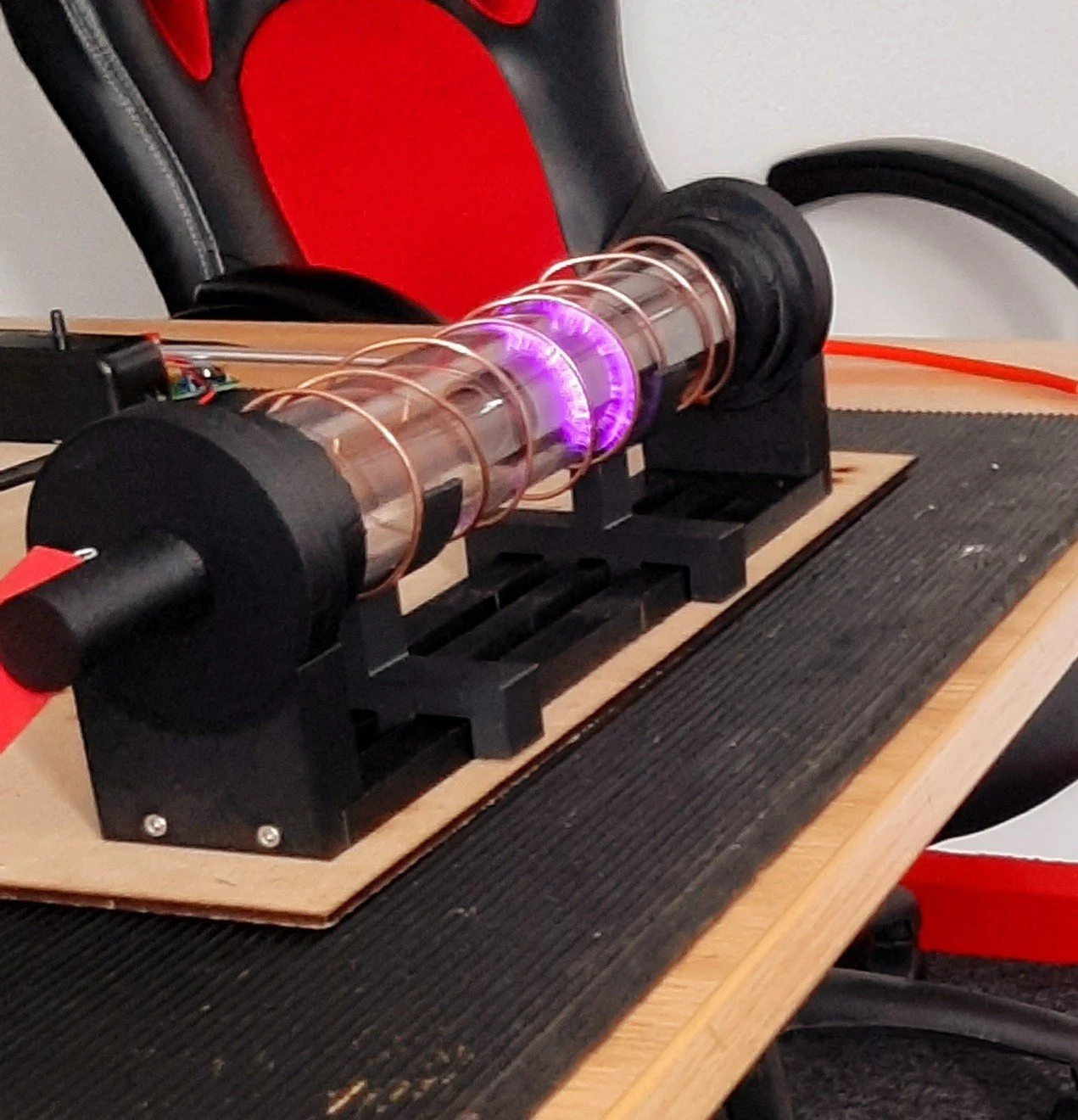
The group — drawn from a mix of scientific backgrounds — were tasked with designing and building a cold plasma reactor capable of operating in air at ambient conditions. It was an ambitious brief that required curiosity, adaptability, and a willingness to experiment. Rather than focusing solely on technical expertise, the project encouraged the students to approach challenges from their own disciplinary perspectives, demonstrating how diverse skill sets can contribute to scientific and engineering innovation.
Throughout the placement, the students developed a range of practical workplace skills. They produced risk assessments, navigated time and budget constraints, and worked collaboratively to solve problems under pressure. These experiences helped them translate academic learning into real world capability, building confidence in their ability to contribute meaningfully within a professional research environment.

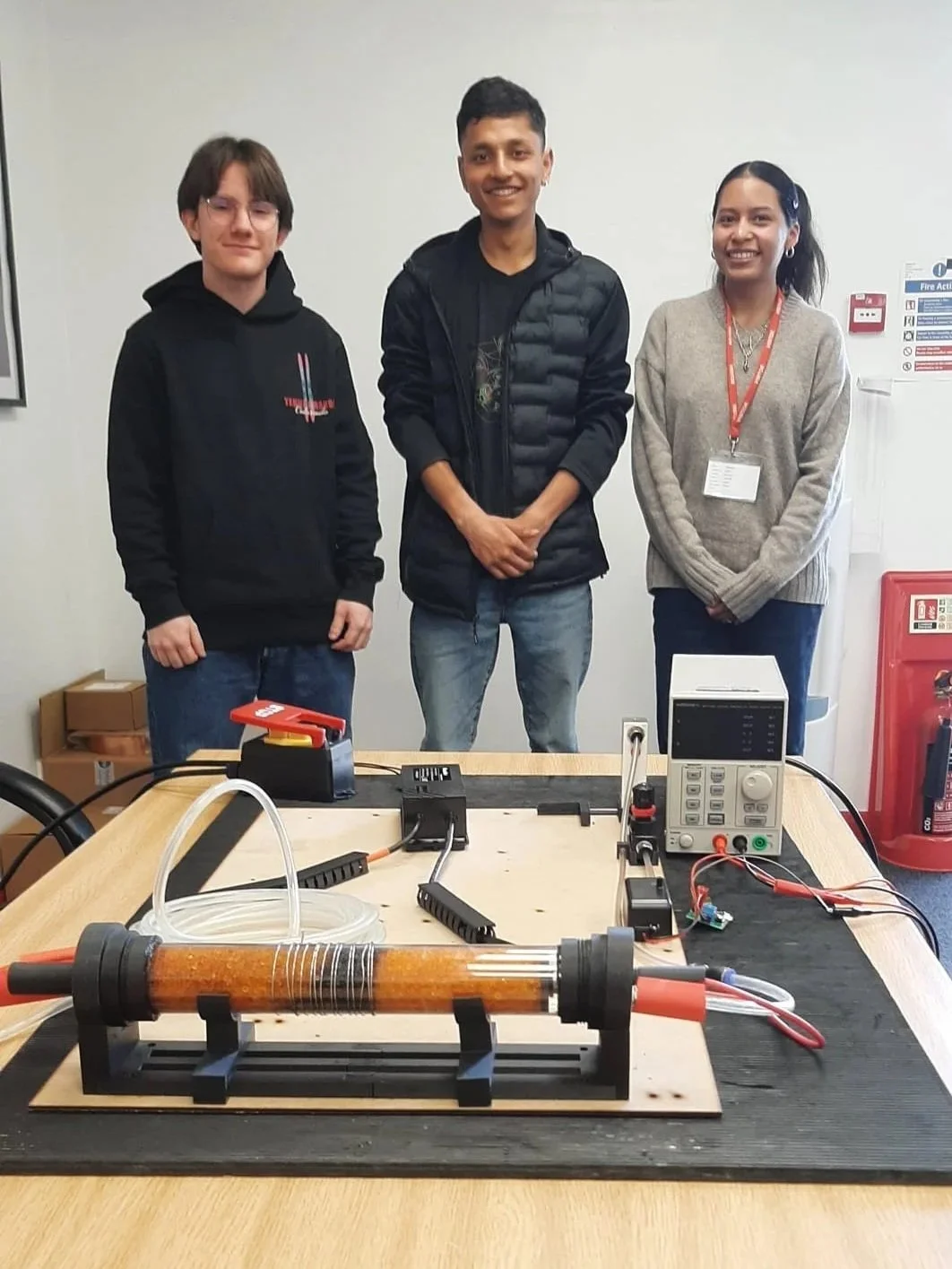
The Motrac team praised the students’ enthusiasm, fresh thinking, and commitment to the project. Their presence brought new energy to the site and highlighted the value of creating opportunities for students to engage with applied research and development.
This placement block reflects Motrac Research Engineering Ltd’s ongoing commitment to supporting the next generation of scientific and technical talent. By offering students the chance to work on real projects with real constraints, the company continues to play an active role in nurturing future contributors to the STEM landscape.
March 2026
British Science Week
6-15th March 2026

British Science Week is the perfect moment to recognise the power of curiosity, experimentation, and engineering innovation.
At Motrac Research Engineering Ltd, science is at the heart of everything we do — from advancing research to developing robust, innovative solutions that make a measurable impact.
This week, we’re shining a light on the engineers, researchers, and problem solvers whose work pushes boundaries and turns challenges into opportunities.
Celebrating our Partnership with the University of Chester
This summer, a new cohort of work placement students will join us to gain hands on experience in real engineering research environments — applying their academic knowledge, contributing to live projects, and developing the practical skills that shape confident, capable engineers.
Our partnership has already delivered fantastic results for everyone involved. Two of our full time engineers began their careers with us as University of Chester students, proving just how valuable these opportunities can be for both the students and businesses.
We’re excited to support the next generation of scientists and engineers, and we look forward to seeing the fresh ideas and energy they’ll bring to Motrac this year.
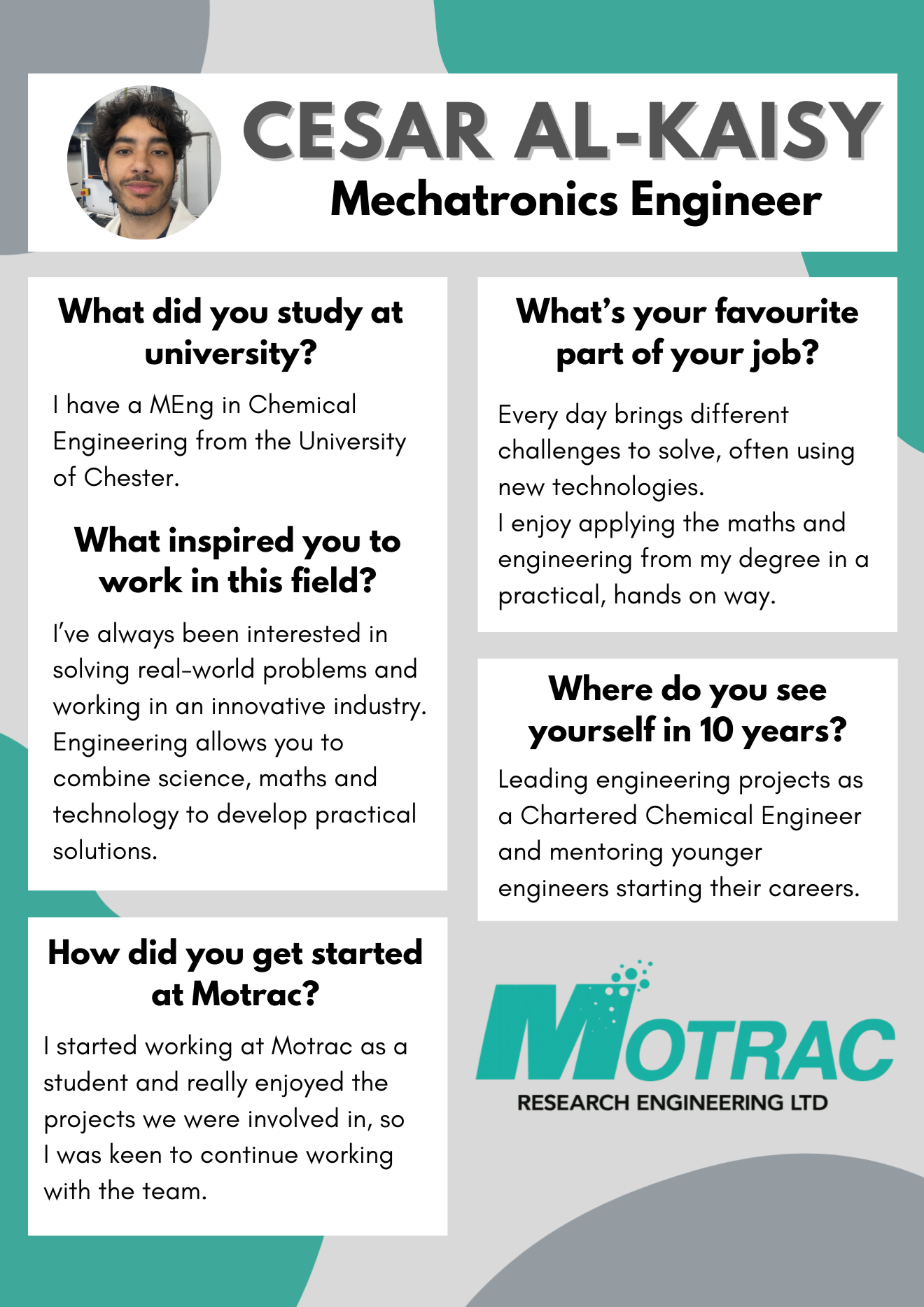
Engineering the Future: Spotlight on Cesar
To celebrate British Science Week, we sat down with one of our engineers, to learn more about his journey, what inspires his work, and how science shapes the projects he tackles.
February 2026

Motrac Research Engineering partners with Sci-Tech Daresbury
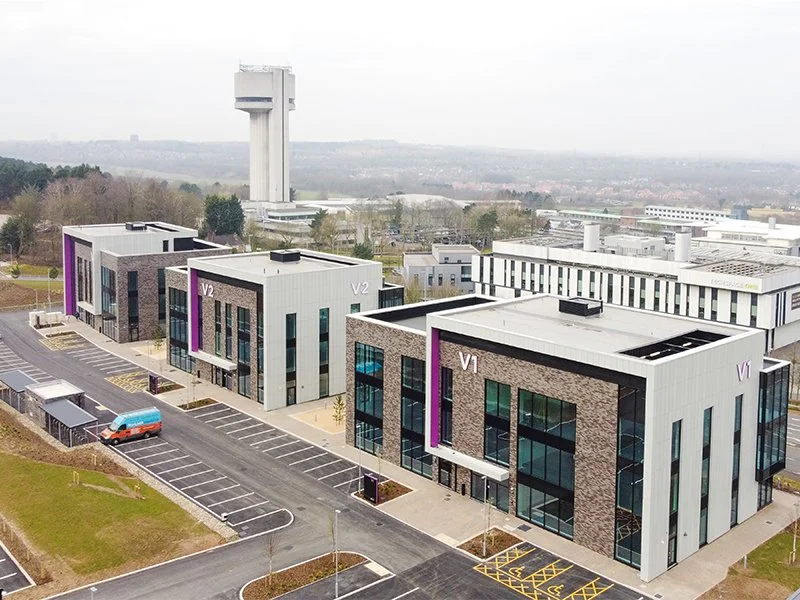
We are thrilled to announce that we have joined the world-class community at Sci-Tech Daresbury.
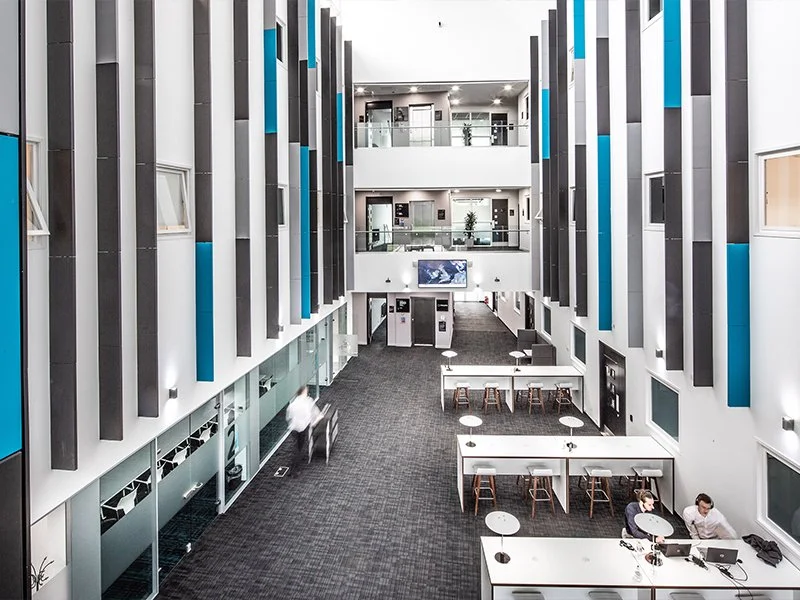
This industry leading campus, in partnership with the Science & Technology Facilities Council, promotes collaboration and innovation between some of the brightest minds in science. In addition, it offers access to outstanding facilities to develop and grow Motrac Research Engineering into the future.
Sci-Tech Daresbury say:
“We create the conditions for ambitious businesses to accelerate growth and deliver real-world impact. We do this by combining world-class science infrastructure, tailored business support and state-of-the-art office and laboratory space.
From our home in the Liverpool City Region, we stand on the shoulders of pioneers who have pushed the boundaries of science and technology for over fifty years at Daresbury Laboratory -making scientific breakthroughs that changed the world.”
To learn more, visit:
Sci-Tech Daresbury | UK’s Leading Science Park & Innovation Campus

January 2026
Living Wage Accreditation
We are pleased to announce that we have received accreditation from the Living Wage Foundation as a Living Wage Employer.
Company Director Steve Hammond stated: “By paying the real Living Wage, Motrac Research Engineering is supporting our employees with a decent standard of living and driving up standards to tackle in-work poverty.”
Fairer, better work is at the heart of what the Living Wage campaign is trying to achieve and why great businesses and organisations choose to go further than the government minimum.

What is the Living Wage?
The real Living Wage remains the only UK Wage rate calculated on the real cost of living. It is voluntarily paid by over 16,000 UK businesses who have chosen to transform millions of people’s lives and raise the bar for what decent work looks like in the UK.
You can find out more about the Living Wage by visiting www.livingwage.org.uk
October 2025
A Quality Milestone: ISO 9001 Accreditation
Motrac Research Engineering has officially achieved ISO 9001 accreditation, marking a major milestone for the company and underscoring its commitment to high‑class quality management.
Company Director Steve Hammond stated: “What makes the accomplishment stand out is not just the certification itself, but the speed and precision with which it was earned. The team undertook an intensive, highly focused effort to align processes, documentation, and quality controls with the rigorous international standard — all within a notably short timeframe.”
The result: a flawless audit report.
ISO 9001, one of the most widely recognised quality management standards globally, requires organisations to demonstrate consistent performance, strong customer focus, and robust, repeatable processes. Achieving accreditation without any non‑conformities is rare and signals a mature, disciplined approach to operational excellence.
The certification positions Motrac Research Engineering for continued growth, strengthening its credibility with clients and partners while reinforcing its commitment to delivering high‑quality engineering research and solutions.
Motrac Research Engineering partnered with world class testing, inspection and certification company, SGS United Kingdom.